Raksha Bandhan, often called “Rakhi,” is one of the most cherished festivals in India, deeply rooted in the ancient traditions of Sanatana Dharma. More than a ritual, it is a celebration of protection, love, and mutual respect, echoing through centuries and reverberating in the spiritual texts and social customs of Hindu civilization.
The tradition of tying a protective thread, or raksha sutra, finds mention in several ancient texts:
Raksha Bandhan is celebrated as a day of assurance and bonding:
Raksha Bandhan typically falls on the full moon day (Purnima) of Shravana, a period of renewal and celebration:
Raksha Bandhan transcends ancient customs and remains vibrantly relevant:
Raksha Bandhan radiates positive vibes, anchoring hopes for protection, unity, and growth. It is a vibrant reminder that love, caring bonds, and mutual respect are the keys to a harmonious and creative collective life. As we tie the rakhi, we renew vows not just to protect, but to elevate one another, moving together towards prosperity and happiness.
Raksha Bandhan is celebrated on the Purnima tithi (full moon day) of the Hindu month of Shravana. According to the Hindu Panchang, the most auspicious time for performing the Raksha Bandhan rituals is after the end of the Bhadra period on that day.
Traditionally, rakhis are tied during the shubh muhurat in the forenoon or midday, avoiding the Bhadra kaal, as it is considered inauspicious. The festival falls during the monsoon season and is observed with great devotion and joy across India and wherever Sanatana Dharma traditions are followed.
By remembering that it is always on the Shravana Purnima and ensuring the rituals are done in the Bhadra-free muhurat, one can celebrate Raksha Bandhan correctly every year.
Raksha Bandhan is a beautiful Indian festival celebrated every year on the Purnima (full moon) of Shravana. It is a joyous occasion that honors the bond of protection and love between siblings, rooted deeply in ancient traditions of Sanatana Dharma. As described on Wikipedia and Britannica, Raksha Bandhan’s historical and cultural significance can be traced back to legends from the Vedas and the great Indian epics.
The spiritual importance of Raksha Bandhan is interpreted by The Art of Living, highlighting the festival’s role in fostering harmony and goodwill (Art of Living). The story of Krishna and Draupadi, along with other ancient narratives, is beautifully summarized for younger audiences by the BBC.
For those interested in rituals and scriptural origins, organizations like ISKCON Kurukshetra and ISKCON Ghaziabad provide authentic insights into traditions and ceremonies. The profound Vedic meaning and the universal values of love and duty are further explained in Phool Sacred Stories, while diverse legends and regional stories can be explored on Mango and Marigold Press.
To understand the evolution of the festival and the famous Krishna–Draupadi story, visit the City of Parramatta Heritage Portal.
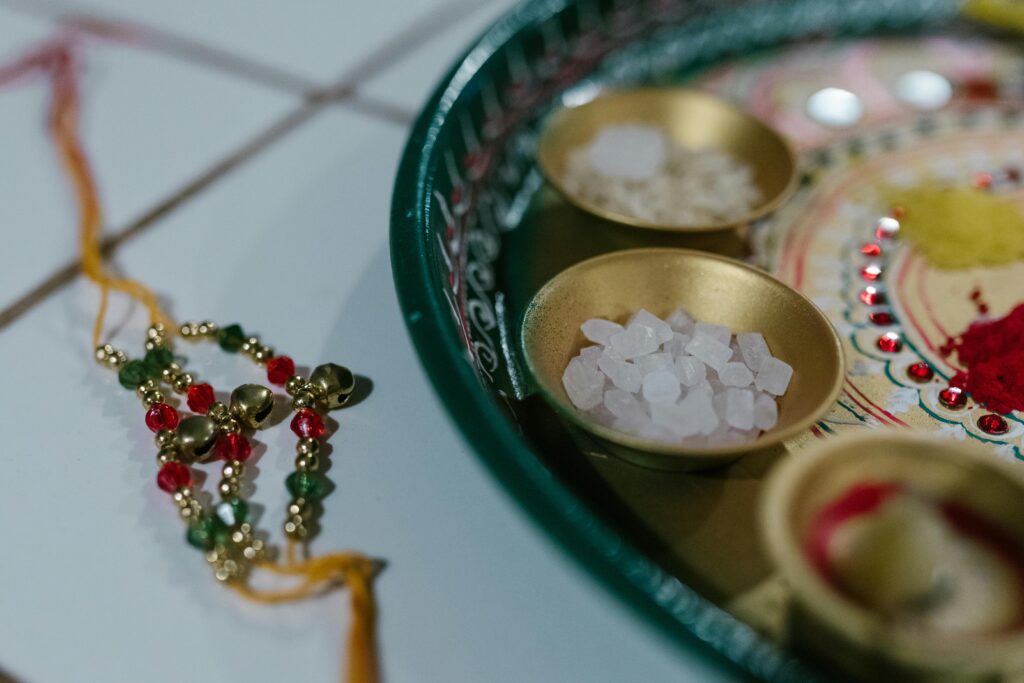
Photo by RDNE Stock project
Discover your family’s destiny by unlocking the secrets of the stars.